
Showing posts with label Walking Around. Show all posts
Showing posts with label Walking Around. Show all posts

Artemy Italian Gelato A New Hangout Place In Yogyakarta
15:06
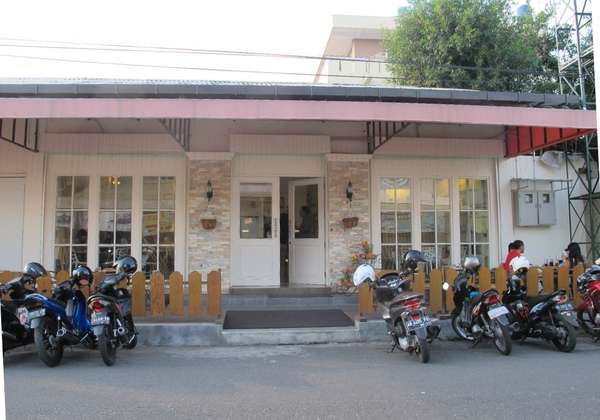
Who says fun hangout in Yogyakarta there's just in Malioboro? In the area there are also Kranggan hangout not less engrossed, named Artemy Italian Gelato. This is the new hangout in Yogyakarta.http://www.blogger.com/img/blank.gif
Spent the weekend in Yogyakarta is always fun. In addition to its citizens are friendly and the cost of living, cheap City of Gudeg never boring due to begin a new hangout, the number of which is certainly fun.
It's true, Yogyakarta has now rapidly expanding and increasingly interesting to visit traveler. Hangout to spend even the mushrooming in the town. One of them is like the one in JL. Kranggan No. 58, Yogyakarta, named Artemy Italian Gelato.
Artemy thrive amidst between angkringan (a traditional of single food court) is on almost all the way in Jogja. This Cafe offers a new ambience to citizens, particularly young people in Yogyakarta.

Cafe was built with modern model in the middle of many old buildings along the way of Kranggan. Artemy was incarnated into new landscapes in Yogya, and also gave a new breath for developments cafe in Jogja.
Just like other cafe in Yogya, Artemy presents a menu of coffee, various refreshment, and became its flagship is the gelato ice cream from Italy. That makes it different and convenient for Artemy visited is the design. Artemy has a unique and interesting design.
How is not unique, utilizing a variety of equipment for Artemy making coffee as ornament. Different kinds of glass bottles and unique funny pun styled neatly. Comfortable impression any immediate rose up once you're in it.
The time of entry into the cafe, visitor directly confronted with different flavors of ice cream gelato. The colors are so varied, gelato seems to attract you to buy it.

Divert your gaze to the right corner. There, there are plenty of refreshment to choose from, some of which is macaroni schotel, fries and mozzarella sticks.
When you are finished, select message food time seating. Cafe provides two places to sit, on the inside and the outside. Well, for those of you who want a breath of fresh air, choose a seat on the outside. But if you want to enjoy coffees atmosphere, choose on the inside.
The price of food in this place are varied and not make the bag on a daylight raid. One scoop gelato free price of IDR 10,000, well, it less than a dollar. For you lovers of coffee, a glass of cappuccino attract the price of IDR 27,500. Well, if you want to enjoy a light snack, you could order Fries or macaroni. For one serving of fries, free of price of IDR 10,000, similar to macaroni schotel price. Cheap isn't it?
Fort Vredenburg The Yogyakarta Point Zero
14:36

Fort Vredenburg The Yogyakarta Point Zero. Vredenburg fortress located in the Malioboro area at zero miles. This fortress was a stronghold of era heritage of Netherlands. With only 2 thousand Rupiahs ($0.2), we can enjoy this historical heritage.
The Fort was one of the tourist destinations in Jogja which is frequently visited. In addition the Fort Vredenburg save many of heritage items and also Netherlands which often used for events such as art, Yogyakarta Art Festival (FKY), weddings, or just to simply take pictures. Now, if on a vacation to Yogyakarta, Yes, do not forget to stop by here!
Come To Yogyakarta, Choose and Take Home Memories
02:09

Come To Yogyakarta, Choose and Take Home Memories. If you love to hunt a variety of handicrafts, do not waste the remaining time in Yogyakarta. In the city of Tours, the tens and even hundreds of handicraft center premises variety of unique products, offering a promising option perfect memories of the trip that you've done in Yogyakarta.
It is not difficult to find a place to buy handicraft goods from the city of Yogyakarta. Starting from that sold by itinerant peddlers in tourist resorts, displayed at the stall on the sidewalk sidewalk traders to the city streets in prestigious venues such as art galleries, if not careful it can make you forget leaving money to buy a ticket to go home :D .
The hunt can start from a place most easily found. Malioboro. This is the legend of the street in Jogja! It is only an inch and not more than one kilometer in length, but this is the breath of life streets of Jogja beat faster. From the north end junction of Tugu Railways Station to the south end of Beringharjo, lined with hundreds of stores and sidewalk vendors offer various types of merchandise handicrafts city of Jogjakarta. Bargain price becomes quite exciting part before the transaction occurred in this place.
For those of you who prefer to buy goods at a price that would craft, can choose a special shop that sells a variety of souvenirs on the Malioboro street. One of the largest are located Mirota Batik west side, the southern end of Jalan Malioboro. In these places the traveler who is not smart bargain prices, can shop in peace. Handicrafts that are sold no less diverse. Almost all berbarang crafts in Yogyakarta can be found here. From batik to sculpture of Asmat from Papua.
Hunting craft items are actually more fun made in the center of craftsmen. In addition to the price offered will be cheaper, you can also watch live as well as entertained by the "artist" of handicraft goods that produce these handicrafts. It required a special time to do it. But if it's your choice, then immediately rushed to the adventure. Determine what type of item you want to search. Bamboo craft? Some centers in the area of Sleman District could be an option. Sendari Hamlet, and Hamlet Mlati Nggamplong, Moyudan, are two craft centers located in the territory of the slopes of Mount Merapi which is known to produce various handicrafts made of bamboo.
But if you are looking for is a handicraft items made of pottery or primitive sculptures, leather goods or miniature planes, then there is no other more fitting place to visit than in Bantul. Kasongan or village of Manding are two very well known center for handicrafts. But if you want to take a shortcut as well, please come to the center of craft and art,Gabusan Art Market, located at Jalan Parangtritis. All the typical of Bantul craft products can be found there.
If you are a hunter craft items more like unexpected surprises in the middle of the journey? If you are the adventurous type like that, why not just immediately rushed onto your "Cruiser" then raced to the south of Yogyakarta headed to Guningkidul or browse Kulonprogo. No guidelines exist anything here because it will reduce the value surpraise you want and you will find. One thing for sure is that you will encounter many surprises that you would never imagine before. Quite exciting in two mountainous areas in Yogyakarta.
Conversely, if you are a people who "steal" time for hunting craft on the sidelines of the important activities in Yogyakarta, the shopping guide may be helpful. You can just come, choose a suitable then buy to take home.
Yogyakarta: Nightlife
18:16
Before branch out to see any of the bounded pubs and clubs, visitors should accomplish abiding to bolt a achievement of the acclaimed wayang kulit adumbration boob theatre performances which play nightly at locations all throughout Yogyakarta.
After commutual this cultural experience, travelers can arch out to adore the area’s nightlife scene. Most night spots are accessible from ten in the black until three in the morning athough times alter by venue. Places account blockage out may include:
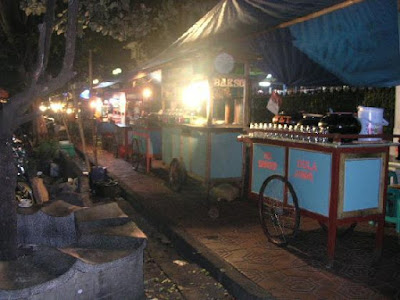
After commutual this cultural experience, travelers can arch out to adore the area’s nightlife scene. Most night spots are accessible from ten in the black until three in the morning athough times alter by venue. Places account blockage out may include:
- Blatz Lounge – Travelers absorbed in blockage their email while sipping some wine can do so at this location.
- Junction – This club is accepted for its DJ music.
- Malioboro Artery – Visitors accepting annoyed of accepting central should arch over to this artery on weekends to see nightlife confused outside.
- Sheraton Mustika Resort and Spa Complex – This resort is home to several altered confined and nightclubs which accumulate guests of assorted interests entertained. Hugo’s is a accepted club actuality which is accepted for its midnight bar achievement as able-bodied as its reside music. Embassy is addition bistro frequently enjoyed by guests in the area.
- Soda Lounge – Travelers absorbed in affair up with others in the breadth for things such as talking about books will acquisition that this is a abode to do so.
- TJ’s – The name is abbreviate for The Jetsets, a bar which offers reside music as able-bodied as bounded DJ’s.


Ramayana Ballet: Yogyakarta Performing Arts
18:00

The a lot of acclaimed of all achievement art in Yogyakarta (and for that amount in Java and abundant of the blow of Indonesia as well) is the age-old art of wayang kulit. The chat wayang actually translates to theatre and the wayang kulit performances are amphitheater performances of adumbration boob plays. This admirable art began as a adjustment of storytelling as far aback as the aboriginal aeon and has connected to advance anytime since. There are wayang kulit performances about every night about in the city-limits of Yogyakarta .

Another accepted anatomy of performance art in Yogyakarta is the different appearance of music developed there alleged the Gamelan Yogyakarta. Gamelan music is fabricated up of the sounds of different instruments such as gongs and xylophones; Gamelan Yogyakarta is a aberration of the acceptable gamelan sound. Travelers should ask their bounded auberge assembly breadth they can apprehend gamelan yogyakarta during their break in the area.
Things to Do in Yogyakarta
18:37

Yogyakarta is one of the most important tourist destinations in Indonesia and attracts visitors from all over the world. There is no shortage of things to see or do in Yogyakarta. Visit the pristine temple, the royal palaces, a part of traditional festivals and fairs or opt-out for some exciting activities such as mountain climbing or cycling. The Party Animals, there are many night clubs and for the buyer, this is a great place to buy some exotic artifacts.

Visit: the wonderful Ketron can complex that you say is so much to go on the lifestyle of the sultans and the royal families of Yogyakarta. There are also temples like Ratu Boko, Borobudur Temple and the sari. The various beaches with the fish and seafood stalls camps are also popular tourist attractions. These include the Glagah Beach and Baron Beach. Apart from these, there are several museums and in Yogyakarta.

Take part in festivals: There are many festivals held in Yogyakarta throughout the year. It is the ceremony, the ceremonial presentation Labuhan offerings sea to agree to the gods and the favorable Sekaten, Saparan Festival, colorful parades and often months long night includes includes fairs. The most beautiful among all these is the Art Festival, which allows you to witness the cultural richness of Yogyakarta.
Sport and recreation: Enjoy the dangerous ascent of Mount Merapi, or even to go for cycling.

Shop or enjoy the discos: Yogyakarta has many shopping opportunities. Here you will find everything from local markets to sophisticated malls. The nightlife in Yogyakarta is gratifying to. Hugo's Nightclub is a popular destination for both tourists and the native fun-loving masses. If you are still left with little time, do you dine in the wonderful restaurants and taste some of the traditional Indonesian delicacies.
Nervous Wrecks
13:00
The waters surrounding Indonesia are traversed by an incredible amount of traffic every day. The Straits of Malacca alone see 800 ships a day and over half the total amount of freight in the world passes through them each year. This is not a new phenomenon; vessels have travelled through Indonesian waters—the shortest nautical route between India and China—in great numbers for hundreds, if not thousands, of years. And they have also been sinking in these waters for centuries—due to uncharted reefs, treacherous currents and trade wars between battling world powers.
This is not news to underwater treasure hunters. One particular group has recently run into trouble with the Indonesian authorities while trying to salvage the cargo of a Chinese ship that sunk over a thousand years ago in what are currently Indonesian territorial waters. The wreck, located 130 nautical miles from Jakarta, rests 54 metres below the surface. The cargo is highly valuable, containing ceramics from China’s Five Dynasties period (907-960 AD) as well as Egyptian artefacts. These were scheduled to be auctioned by Christie’s during 2006 and 2007. The auction house has valued the cargo at several million dollars.
However, the dive team—including people from Britain, France, Australia and Germany—were taken from the site of the wreck and detained in November 2004 by Indonesian authorities, who now maintain that the work the divers were performing was illegal. The divers, forbidden to leave Jakarta, say the Indonesian navy boarded their diving platform and detained them, despite—they say—the project having all the right permits. They also claim that all the salvage work and diving was performed in the presence of government officials. According to Project Director, Luc Heymans, the official agreement between the Indonesian government and the project specifies that Indonesia will receive 50% of the proceeds when the cargo is eventually sold. As a result of the salvage operation being halted, only 60,000 of the estimated 160,000 pieces have been brought to the surface; these are currently being held in Jakarta.
Indonesia’s Agency for the Protection of Underwater Heritage has issued a report claiming the divers on the project were working illegally. The team, however, claims it attracted attention because it only used official, rather than ‘corrupt’, channels to obtain permission. In fact, much of the reporting on this matter has accused the Indonesian government of having unscrupulous motives for stopping the divers, without questioning the motivations and methods used by the treasure-seekers or even the legalities of the matter.
While submerged wrecks in Indonesia are big revenue-raisers and important attractions for the scuba diving industry, this would not be the first time foreign wreck-hunters have made large profits from sunken treasures found in Indonesian waters. In 1985, Michael Hatcher, while searching for the Geldermalsen (a Dutch East Indies Company ship that sank in 1752), came across the wreck of a 17th century Chinese junk. The cargo turned out to be Ming porcelain, valued at two million pounds sterling. Hatcher also found the Geldermalsen later that year, in a site he claimed was just outside Indonesian territorial waters. Dubbed ‘the Nanking Cargo’, it also contained porcelain— perfectly preserved because it had been protected by a load of tea. It earned Hatcher ten million pounds sterling when it went to auction at Christie’s in Amsterdam; the auction house came under criticism for the haste with which the pieces were sold.
The Indonesian government and several marine researchers also challenged Hatcher’s claim that the Geldermalsen was found outside Indonesian waters. Paul Martino, a diver working on the wreck site, was arrested by the Indonesian navy in 1988 and held for several months on Bintan Island before being released. One of the Indonesian investigators drowned in a diving accident at the site while attempting to verify the claims. The Indonesian government eventually dropped the enquiry and, following this dispute, made the Coordinating Minister for Security and Political Affairs responsible for the issue of wreck salvaging, to ensure that Indonesia would receive its due share of any future discovery. In 1989, Indonesia awarded two-year contracts to three companies (all connected in some way to the Suharto family), to hunt for an estimated 40 sunken treasure ships lying at the bottom of the sea around the archipelago, with the proviso that 50% of the proceeds would go to the Indonesian government.
Wreck-hunting has not only been problematic in domestic politics; it has also become an international relations issue. Southeast Asian maritime boundaries are still heavily disputed, which leads to arguments about ownership rights once a wreck is found. Does the wreck belong to the home-country of the ship, or to the country that produced the cargo? Or does it belong to the country in whose waters it sank? There are few, if any, domestic or international laws regulating treasure-hunting. The 1982 Convention on the Law of the Sea barely mentions underwater treasure. UNESCO has drawn up a convention that would ban all commercial use of underwater wrecks, but the world’s major maritime powers—the United States, Britain, France and Japan—have refused to sign, citing the tradition that warships forever belong to the country that launched them, even if they are four centuries old.
Treasure-hunting is also of great concern to archaeologists, who fear that with the profit-driven exploration of wrecks and the immediate sale of their contents at auction, their historical significance will be lost. The Geldermalsen is an oft-quoted example of how the haste to obtain profit compromised the wreck’s archaeological or historical value. There are still many wrecks that remain lost, submerged somewhere in Indonesian waters. Many have cargoes as valuable as the ones already found and yet, without clear legislation regarding who has the right to the cargo, it is doubtless that conflicts between private companies and the Indonesian government will re-emerge.


Sidewalk Drinking in Jogjakarta
12:46
Mas Noto—not his real name, of course—is becoming quite famous in Jogjakarta as a vendor of lapen: a potent, palm sugar-based alcoholic brew that’s popular in Central Java. His roadside stall (warung), in a relatively strategic position in the busy city centre, is always full of customers—ranging from university students, musicians and pedicab drivers to thugs (preman) and other nocturnal wanderers—all looking for a cheap way to get drunk. Come the weekend, the clientele spill out onto the sidewalk in front of the warung, queuing up to get their drinks and jostling for a place to sit. “It gets to the point that I just run out of mat space for them,” says Mas Noto.
The increasing popularity of his warung makes Mas Noto happy. His profits are undeniably on the up; but the scale of his profit is not just determined by the keenness of his clientele—it also depends on how many police officers come to ask for money at the warung. This is called ‘security money’ (uang keamanan): money that owners of unlicensed drink stalls have to pay the police to avoid being shut down. This cash is not paid to the police on an institutional basis, but to the individual police officers who regularly drop by.
According to Mas Noto, his place receives visits from no less than ten police officers every night; this number may rise to as many as fifteen on the weekends. The amount of the money given varies, depending on whether the collectors come by car or by motorbike. If they arrive by motorbike, they are usually paid Rp 10.000. But if they turn up in a kijang (sports utility vehicle), Mas Noto pays Rp 50.000 to each carload, even though there may be only three officers inside. “The ones who travel by car are of higher ranks, you know—so they ask for more,” he explains.
In a single night, he may shell out from Rp 100.000 to Rp 150.000 in security fees. The amount keeps escalating from year to year, along with the popularity of his warung.
Mas Anton (also a pseudonym) is in a slightly different situation to Mas Noto. He also sells liquor ‘under the table’ at his cigarette kiosk (warung rokok). He usually pays his security money in cigarettes, so he calls it ‘cigarette money’ (uang rokok) instead.
You won’t hear the din of drunken chatter here, or the sounds of clinking glasses and coarse, drunken laughter; the alcohol sold here is taken home. At a glance, this place looks just like an ordinary cigarette-vending stall. There are no chairs or tables, not even a mat. The only obvious difference is the boisterous intensity of business because of the take-out alcohol sales.
“If I only sell cigarettes, there’s not much profit; but if I also sell alcoholic drinks, it’s much better. Usually, from a person who buys a pack of cigarettes, I only make a profit of Rp 500 at most. When someone buys a bottle of vodka, I get between Rp 2.000 and 3.000; from Topi Miring or McDonald [both local brands of liquor], I get Rp 1.000 to 2.000 per bottle. And this doesn’t include the money I make when they buy mixers, like Coca Cola or Sprite, at the same time. Then the profit is even higher, right? So that’s why I sell alcohol,” says Mas Anton.But surely his profits must be limited by the quantity of free cigarettes he doles out every day: “I can use five packs of cigarettes a day for ‘security’. On a Saturday night, it’s more—around ten packs,” he explains with a grimace.
Mas Noto and Mas Anton both acknowledge what a big headache this police conduct gives them. They are glad that their places are so well-known and that they are inundated with customers from all over the city. But increasing popularity and larger crowds mean that there are more and more police coming to collect security or cigarette money as well.
And this is not to mention the stigma they incur in Islamic Java—being branded as immoral people, as sellers of forbidden (haram) goods and purveyors of social malaise, forces them to live in semi-isolation. “Selling hard drinks is a line of work you can’t take much pride in. My family and I have never had the courage to be honest with people when they ask about my job. It would be very different if I were a doctor or an engineer; we’d be sure to tell everybody about it then, even if they didn’t ask,” says Mas Anton, laughing with a hint of bitterness.
Mas Noto holds a similar opinion: “Please don’t write my real name or the address of my place in your article,” he whispers. “It’s not that I’m afraid of being known or afraid the police will arrest me. But I am scared that even more officers will come around to ask [for money], if I become known on account of your writing. Besides that, if too many of my family in the village found out, I’d be really embarrassed.”But even though Mas Noto prefers to go incognito, he is not entirely ashamed of his illicit trade: “Although many may think my business is deviant, it enables me to support my family and employees. I don’t mean to be arrogant, but my house in the village has more than one storey these days.”
It is clear that the business of selling illicit alcohol in Java is fraught with ambivalence, but that somehow the underground drinking culture remains strong. I decide to ask some friends from campus about how they feel about drinking one evening, while we’re hanging out eating chicken saté by the mobile night stall near my boarding house.
“I can say ‘no’ when I’ve been drinking,” says Herman, a student from Jogjakarta. “My parents always taught me to be well-behaved and friendly towards other people. That’s why I find it hard to say ‘no’ about all kinds of things: in Java, we call that pekewuh (shame). If I have friends playing computer games in my room for hours and I’m tired, for example, I don’t feel good asking them to stop—even though I really, really want them to. I don’t say what I mean. But once I’ve had a drink, I feel courageous and able to refuse things—even I can be like that.”My friend Ari, a nightclub DJ, says that a having a few drinks helps him do his job with more flair: “I really enjoy DJ-ing. I’m not hung up on what people think and feel more confident to play the tunes I like best. If I’m happier, the audience is happier too. It’d be hard to make the audience happy, if I wasn’t, wouldn’t it?”
Deni, another fellow student, takes a different attitude. He feels valued when he drinks: “I’m a quiet guy and skinny too. People used to take advantage of me because of that; at my boarding-house they’d ask me to go get them cigarettes or drinks or whatever. I didn’t mind at first, but when it happens so often, it gets boring. But after they found out how well I can hold my drink, that all changed. My friends at the boarding-house, with their big bodies and big mouths, often threw up before me when we drank together. They started to respect me. They figured I was hanging around with lots of preman, so they got scared and stopped ordering me around,” he says.
Ketut, who is very religious and whose father is a lecturer at one of the private universities in Bali, also feels that he gets something positive out of drinking alcohol. He says it helps him make friends: “Conversation flows better when we’ve been drinking. You don’t have to be polite and formal—it’s ‘Vodka Connecting People’, isn’t it?” he says, pointing to the same slogan on the t-shirt he’s just bought. Besides all these good points, they are all aware of the health consequences of binge drinking. “Ya, drinking too much is bad for your liver, isn’t it?” says Deni, who has just lost a friend to drink-related liver disease. “He was a good footballer too,” he says, “strong on the field, strong at drinking. It got to his liver and he died young.”Ketut, who is sitting next to him, interjects: “Death is in the hands of God, who doesn’t care whether you can handle your drink or not. There are lots of old people in my village who have been drinking since they were young and they’re still fit and drinking.”
Ari has been quiet for a while now, obviously thinking things over. “In my view,” he says, “the health issue only affects certain people. What worries me is when people associate drinkers with preman, criminals and brawlers—that’s what they say on the TV too. I’m bored and fed up of hearing it. It also influences how people view my job. Just imagine—my parents could ban me from DJ-ing if they watched some TV programme that says all DJs are drunks. They’ve already threatened to stop paying my university fees if I keep DJ-ing.”
Herman tells a similar story of parental concern: “One of our neighbours went as far as to stop his son from hanging out with me because people were saying I drank too much. My own father took me to the healer (dukun) to get a blessing. I’ve been forced to pray in the mosque every day since then. I don’t socialise in the village much these days, and I’ve told my father that I don’t drink when I’m in Jogja.”
Deni, on the other hand, comes from Flores, where drinking is less illicit. “Both my parents know I like to drink—in Flores, all the kids drink sopi [a strong local alcoholic concoction]. Since I’ve been studying here, though, I’ve told them that I’ve cut down. I’m embarrassed; and I think they’d reduce my monthly allowance if they thought I was spending it on alcohol. I’m scared of that,” he explains.The conversation takes a new turn as my friends start weighing up what has been said. They start thinking of the morning after, about feeling lousy with a headache and a churning stomach. This is what they call “pusing habis mabuk”—hangover.
At this point, Ahmad, the Madurese saté vendor—who has been quietly eavesdropping—joins the banter: “You have to drink one tablespoon of coconut oil if your head is still spinning and pounding. Then your unpleasant feelings are guaranteed to vanish,” he says. He got the recipe for this hangover cure from his father. He tells us that he really liked drinking alcohol before he married; he used to go drinking with his friends in Madura nearly every night. Once, he admits, he drank a huge amount of liquor on a friend’s birthday. “I drank about ten bottles of Topi Miring and McDonald with four of my buddies. Next day, my drunkenness just wouldn’t go away. My father recognized the symptoms and forced me to drink a spoon of coconut oil. It was a miracle, mas—in no time my symptoms disappeared and I came to. But my father was furious with me. I wasn’t allowed to leave the house for a week. Every time I go drinking at a friend’s place, I always keep a supply of coconut oil on hand,” he explains, laughing at this memory of his youth.
According to Deni, at every party in Flores—be it a wedding, a birthday or a party for no reason in particular—there is always plenty of sopi. All the guys get smashed on sopi, so it’s not uncommon for them to wake up with a hangover the following day: “We have a tradition by the name of balas (revenge): if sopi makes us hung-over on the morning after, we retaliate by drinking one more glass of sopi to cure it. Its effectiveness is proven!” he explains.
He and his friends from Flores continue this tradition now that they are studying in Jogja. They carry out the balas tradition whenever they are suffering after a party: “The difference is that here, when we balas, the revenge we take is usually excessive. We don’t just balas with one small shot glass, but by drinking several more bottles. So that’s how it is—we’re continuously drunk until the money runs out. Usually when a binge like this happens, we stay drunk for three days and three nights straight,” says Deni, laughing.“I often receive invitations to attend parties because I can really hold my drink. They’d all like to outdo me. It’s not bad—I can get drinks for free and there are plenty of people who look up to me,” he says with pride.
Ketut has a slightly different strategy. According to him, fresh cow’s milk is the most effective medicine: “It’s like… the evil drink must be opposed by a good drink. Alcohol is an evil drink, isn’t it?—so you have to fight it with milk, a drink that’s good for your health. It does the trick—just try it. I often do this when I have a hangover after drinking arak (a highly potent distillate of coconut palm or rice wine) or vodka at my boarding house,” he explains.
Herman interjects sagely: “If we’re already addicted to coffee and we don’t drink it for one full day, we’ll surely get a headache; and we can get rid of it immediately by drinking a cupful. A headache caused by not drinking coffee has the same character as a headache from a hangover. So coffee too can be used to cure a hangover.”
Ari claims that the best cure for a hangover is simply iced water. “Drinking excessive amounts of alcohol makes us dehydrated, doesn’t it? So just drink as much water as possible. It’s refreshing and can make the sick feeling disappear. If you don’t want to get hung over in the first place, it’s better if you use ice-cubes every time you drink strong drinks; or while you’re drinking alcohol, balance it by drinking water, too,” he advises with confidence.
“Just last night, I went to a Jack Daniels party. My boss had a birthday, and treated the whole staff where I work. My head is still pounding a bit now, but it’s cooled down from how it was a few hours ago. Umm… look—the iced water in the fridge is all finished and I’m standing upright. That’s proof, isn’t it—iced water is powerful,” he adds.
A similar note is echoed by Pak Senen, a neighbourhood pedicab driver who has just pulled up to the sidewalk, when I ask him about his favourite hangover cure. He says that he often has a hangover after drinking lapen and that water is the most effective medicine for him: “It’s cheap,” he says, “But the water cure takes a longish time. If you want it to be quick, just take Panadol [a headache tablet containing acetaminophen and a dash of caffeine]. You’ll get well quickly, and it’s still not expensive.”
“In the village, I often used young coconut juice—that’s also quick and cheap. And why are you asking about hangover cures, anyway? Have you just spent the night getting drunk?” he asks, scrutinising me more closely now.
When I explain that I’m working on a magazine article about drinking, he quickly interrupts: “Don’t write my name, OK? If someone finds out and reports it to my wife, she might go amok. She’ll think I’m always drunk,” he says in a whisper.
It isn’t only Pak Senen and the warung owners who don’t want their names mentioned; Deni, Ketut and Ari join the chorus.
“Don’t write my full name, ya? If someone from my family reads it, it could be risky. They’ll think that I’ve become a drunkard here and haven’t been studying,” says Deni.
“What? You want to write this for Latitudes? Don’t mention my name! My father often reads Latitudes; he’ll get the wrong idea,” says Ketut.
Ari is more bombastic: “Just disguise my name, right—because I’m afraid if someone finds out I’m often drunk while I’m DJ-ing, I could get fired. And it wouldn’t be nice for my professional image either, if I become known as a drunkard,” he adds, quite soberly.The attitude of semi-denial shown by these vendors and drinkers distorts what is really going on. Their stance is a way to justify their place in the world, even though it is at odds with the dominant norms of both traditional Javanese and Islamic cultures. Despite the fact that they have no real urge to quit drinking, they respond to my questions with embarrassment or awkwardness, out of fear of intervention. But they temper this with a confident humour, a kind of pride in their courage as drinkers. Their embarrassment doesn’t mean that they will submit to these norms; they aren’t willing to bend down and adhere to them.
A hangover is not just the condition of an aching head and a churning stomach; neither is conventional medicine always the most appropriate way to overcome it. There is an internal conflict within this drinking culture that can not be cured by a spoonful of coconut oil or fresh cow’s milk; by coffee, iced water, or Panadol, or even young coconut—neither can it be treated by following the tradition of balas. It is a hangover perpetuated through denial: “Psst, remember not to write my real name, ya?”


Subscribe to:
Posts (Atom)


